Showing posts with label Diagnostic. Show all posts

Wednesday, 24 June 2009

Best Treatment Options for Autism

If you're really worried a loved one with Autism might never truly enjoy life to the full. Finally, You Too Can Join Others Who Have Discovered Simple Methods To Effectively Spot The 31 Signs of Autism;  Learnt Critical Information To Maximize the Potential of Someone With Autism

Continue reading to learn how others like you overcame confusion; uncertainty; discovered the "best" treatment options for their loved one with autism. Click Here!

Tuesday, 16 June 2009

Parents of two autistic sons vaccinated one but not the other

Punch drunk as I am, required to read every alert regarding vaccine injury, I was struck by the facts issued on WKRG.com News 5. Reported by Kesshia Peyton, who interviewed Dr. Paul Offit, there is a surge of parents who are very angry at the diversion that anti-vaccine activists have created.

Tina Brown, mother of 2 boys with autism, decided not to vaccinate son Dylan because his brother Dalton had  been inoculated and was subsequently diagnosed with autism. Sadly, even in the absence of vaccines Dylan demonstrated symptoms of autism at 4 months of age.  (video interview here).

Mrs. Brown believes that there is great need for research in environmental, genetic, and DNA reasons for the onset of autism. She is part of a growing number of parents who want answers, other than the constant mention of vaccine injury.

Dr. Offit, author of Autism False Prophets, believes that "those who oppose vaccines have taken the autism story hostage". He agrees that there is profiteering and quackery in this arena. It is the fundamental action of false prophets, to entice and recruit vulnerable families. Frankly, I agree, but "snake oil" medicine is not relegated to autism. Parents need to be vigilant and at the same time practical about the information that is presented. Sometimes it is very painful to tease our emotions from clarity of thought. We so desperately need a reason, a cure, a miracle, our focus is skewed, and ultimately our children are victims again.
I don't have the answers, but I sure want them. Now.
Author: Robin Hausman Morris
Robin Hausman Morris is a National Examiner. You can see Robin's articles on Robin's Home Page.


Friday, 15 May 2009

Autism's lonely questions

Autism's lonely questionsby The Oregonian Editorial Board
Friday May 15, 2009, 12:33 AM

Without better research, Oregon families will keep exhausting themselves looking for answers

If any medical condition warrants more attention and research, it is autism. The uncertainty surrounding this common brain disorder takes a terrible toll on families -- especially in Oregon, where diagnosed autism rates are higher than the national average.

It is a condition characterized by questions rather than answers: Who will help us? Will I ever connect again with my child? How much hope should we have? Do any treatments work, and what if we can't afford any of them?

No family should have to face these questions alone.

About 1 in 150 children in the United States has an autism spectrum disorder, according to the Centers for Disease Control and Prevention. The rate in Oregon is considerably higher. Some estimates based on school data peg the number as high as 1 in 87.

Behind the numbers are a thousand stories of parents struggling to cope. They are told the disorder is incurable, but lately they've been peppered with stories of miracle cures. They read about various promising behavioral treatments, which tend not to be covered by health insurance or offered through the local public school.

They are told autism is biological. Or maybe environmental.

On top of all that come the dirty looks at the grocery store.

Perhaps this helps explain why disagreements within the autism community can be so fierce and personal. The stakes are so high, the parenting can be so lonely, and the research is still so thin.

Portland State University is hosting a statewide conference this weekend about educating children with autism. The keynote speaker, Dr. Laura Schreibman, is a longtime advocate of basing autism treatments on good science and not on anecdotes and testimonials. She's a controversial figure herself, at least among people who think she dismisses promising new treatments.

But Schreibman brings up the right point: The need for better autism research is painfully clear.

The federal government is preparing to invest $1.1 billion in "comparative effectiveness research," which will evaluate and rank various therapies for different health problems. The Obama administration also intends to boost funding for medical research in general.

It's not clear whether autism will be treated as a priority area, but it should be. Without better methods to diagnose and treat autism, and without a better understanding of what causes the disorder, families will continue to bankrupt themselves looking for homegrown cures. These families need more guidance. So do the health insurers and school districts that are supposed to act as partners.

We don't know the answers.

We're still learning the right questions to ask.

-

Tuesday, 12 May 2009

Early tests for autism

Q. Is there any early way to tell if a toddler might have autism?

A. There is no standard test yet for autism, a brain development disorder in which children have impaired social interactions, difficulty communicating, and use repetitive words or actions. But new findings from researchers at the Yale Child Study Center in New Haven hint at one possible way to identify autism earlier: track a child's eye movement.

If someone is talking to the child, and the child's attention is focused more on the speaker's mouth than the eyes, that may be an early sign of autism, researchers say.

Normal children focus on the eyes, and autistic toddlers, by failing to do so, "are missing rich social information," said psychologist Ami Klin, director of Yale's autism program.

"The mouth is the place where there is the greatest amount of audiovisual synchrony," he said, "which raises the hypothesis: What is the experience these children have when facing another human being?"

Dr. Thomas R. Insel, director of the National Institute of Mental Health - which partially funded the latest study, published online in the journal Nature - said in a statement that the research shows for the first time "what grabs the attention of toddlers" with autism spectrum disorders. Not only does this suggest potential diagnostic tests, he noted, but it may also suggest ways to re-direct visual attention in these children.

Usually, children with autism are not diagnosed until they are 2 or 3, partly because their language skills are not developed sufficiently until then, said Dr. Christopher Walsh, a geneticist and neurologist at Children's Hospital who studies autism.

But there is great interest, he said, in diagnosing children earlier because intensive behavioral intervention done in the early years seems to help them later in life.

The challenge now, said Klin, is to see if doctors can tell soon after birth if a child is at risk for autism. By using the quantitative methods from the new research, he said, hopefully "we will be able to do so, even with children at only a few months of life." From The Bonston Globe


-

Wednesday, 6 May 2009

Genetic Risk Factors for Autism


Researchers have made an important step forward in understanding the complex genetic structure of autism spectrum disorders. A researcher collaboration, including geneticists from the University of Pennsylvania School of Medicine and The Children’s Hospital of Philadelphia (CHOP), have detected variations along a genetic pathway that is responsible for neurological development, learning and memory, which appears to play a significant role in the genetic risk of autism. Their findings were published online in the journal Nature on April 28.

Evidence suggests there is a strong genetic component increasing the likelihood of an autism diagnosis, estimated to impact 1 in 150 children in the United States. The study findings suggest that a particular genetic variation, found on a cluster between CDH10 and CDH9, is commonly found in children with autism, according to co-senior author Dr. Gerard Schellenberg, professor of pathology and laboratory medicine at the School of Medicine.

“We studied more than 10,000 children­—of whom more than 4,500 had been diagnosed with an autism spectrum disorder—and found a common genetic variation that increases the risk of a child developing autism, along with a rarer genetic change that contributes to some cases of autism,” Dr. Schellenberg said. “This work yields important clues on what goes awry during development in children with autism and will help us focus on what is the cause of autism at a molecular level.” Cont...

-

Toddler Brain Difference Linked to Autism

Story Highlights
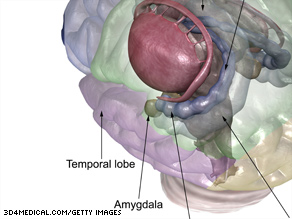
  • Study: The amygdala in toddlers with autism is 13 percent larger than unaffected kids
  • Size of brain area linked to ability to process faces as friend or foe
  • Autism is believed to affect as many as 1 in 150 children
  • University of North Carolina researchers hope findings result in earlier intervention
(CNN) -- The size of a specific part of the brain may help experts pinpoint when autism could first develop, University of North Carolina researchers report.

Using MRI brain scans, researchers found that the area of the brain called the amygdala was, on average, 13 percent larger in young children with autism, compared with control group of children without autism. In the study, published in the latest Archives of General Psychiatry, researchers scanned 50 toddlers with autism and 33 children without autism at age 2 and again at age 4. The study adjusted for age, sex and IQ.

"We believe that children with autism have normal-sized brains at birth but at some point, in the latter part of the first year of life, it [the amygdala] begins to grow in kids with autism. And this study gives us insight inside the underlying brain mechanism so we can design more rational interventions," said lead study author Dr. Joseph Piven. cont...


-

Sunday, 12 April 2009

The Early Signs of Autism

Comcast Newsmakers interview: the early signs of autism and the importance of autism treatment at an early age with Caroline Eggerding, MD, Exec. V.P., chief medical officer of Bancroft NeuroHealth in Haddonfield, NJ.


-

Autism Screening Tutorial

Tutorial on evaluating for signs of autism in toddlers, produced by Help Autism Now Society.


-

Autism Signs and Symptoms

"Autism signs and symptoms can sound abstract on the page, but this video illustrates things like lining up toys, stacking blocks, rocking head back and forth, and other repetitive behaviors as it catches a little boy named Kevin in the act. Watch it to compare Kevin's behavior to your own child's ... or just to fall in love with this curly-headed cutie."

Terri Mauro
Guide to Parenting Special Needs
http://specialchildren.about.com


The images from the video would help illustrate some basic concepts that are key for the early identification of children with autism.

World Autism Awareness Day
http://en.wikipedia.org/wiki/Autism


Red Flags that Parents Should Note:

* does not respond to his/her name.
* cannot explain what he/she wants.
* language skills are slow to develop or speech is delayed.
* doesn't follow directions.
* at times, seems to be deaf.
* doesn't point or wave "bye-bye."
* used to say a few words or babble, but now doesn't.
* throws intense or violent tantrums.
* has odd movement patterns.
* is overly active, uncooperative, or resistant.
* doesn't know how to play with toys.
* doesn't smile when smiled at.
* has poor eye contact.
* gets "stuck" doing the same things over and over and can't move on to other things.
* seems to prefer to play alone.
* gets things for him/herself only.
* is very independent for his/her age.
* does things "early" compared to other children.
* seems to be in his/her "own world."
* seems to tune people out.
* is not interested in other children.
* walks on his/her toes.
* shows unusual attachments to toys, objects, or schedules
(i.e., always holding a string or having to put socks on before pants).
* spends a lot of time lining things up or putting things in a certain order.

Source: Filipek et al. (1999). Screening and diagnosis of autistic spectrum disorders. Journal of Autism and Developmental Disorders, 29(6): 439-484.

"Videos like this truly help other parents going through the same thing. There were so many signs I just never knew what was going on." 

-

Symptoms of Autism

All Autistic People Do Not Look Alike

There is a saying in the autism field: "if you've met one person with autism, you've met one person with autism." In other words: every person on the autism spectrum is unique, and one person's set of symptoms is just that ... one person's set of symptoms! This is, in part, because autism is a spectrum disorder: you can be a little autistic or very autistic.


But there's more to it. An array of problems are relatively common among autistic people such as seizure disorders, gastrointestinal issues, mental retardation and mental illness. At this point, no one knows why these conditions are so common among people with autism spectrum disorders. It is possible that these additional conditions are indicators of different kinds of autism, each caused by a slightly different set of circumstances.
While the conditions listed above are more common among autistic people than among the general population, they are by no means universal among people on the autism spectrum. In fact, many autistic people have no apparent mental or physical illness at all.


Social and Communication Symptoms

Most of the time, autism is suspected in a child or adult because of deficits or stereotyped differences in social and communication skills. Some examples of these differences include:
  • Delayed or unusual speech patterns (many autistic children, for example, memorize video scripts and repeat them word for word with the precise intonation as the TV characters)
  • High pitched or flat intonation
  • Lack of slang or "kidspeak"
  • Difficulty understanding tone of voice and body language as a way of expressing sarcasm, humor, irony, etc.
  • Lack of eye contact
  • Inability to take another's perspective (to imagine oneself in someone else's shoes)
While many autistic people have terrific language skills, there are many who have no language at all. In between, are people whose verbal skills are idiosyncratic: They may be perfectly able to talk, but have a difficult time with conversation, small talk, and slang.


Sensory and Motor Symptoms

A majority of autistic people are either hyper or hypo sensitive to light, sound, crowds and other external stimulation. Some have both hyper and hypo sensitivities. This often results in autistic people covering their ears, avoiding or reacting negatively to brightly lit areas, or -- on the other hand -- crashing hard into sofas and craving strong bear hugs. While it's unusual to find an autistic person who is obviously physically disabled as a result of the disorder, most autistic people do have some level of fine and gross motor difficulty. This often manifests itself in poor handwriting, difficulty with athletic coordination, etc. As a result, when autistic people get involved with sports, it's usually in individual, endurance sports such as running and swimming.


Personality Differences

While autistic people do differ from one another radically, it is fairly typical for people on the spectrum to:
  • Engage in repetitive behaviors and ritualized activities, ranging from lining up items to following a rigid routine,
  • Have one or a few passionate interests,
  • Have difficulty in making and keeping multiple friends,
  • Prefer activities that require relatively little verbal interaction.
It also seems to be the case -- for as-yet-undetermined reasons -- that certain interests are of particular interest to many people on the autism spectrum. For example, an enormous number of young children with ASD's are fascinated by trains (and the Thomas the Tank Engine toy), while a great many older children and adults on the spectrum are interested in computers, science, technology, and animals.

Diagnostic
---
-

Tuesday, 10 June 2008

Need to detect autism at early stage

Need to detect autism at early stage

By SALINA KHALID
Photos by GLENN GUAN


ALTHOUGH more people are now aware of autism, there are no statistics on how many are affected by the condition in the country.

National Autism Society of Malaysia chairman (Nasom) Teh Beng Choon said without statistics, it was difficult for the society to assess the real situation locally.

“We have been going around to various organisations, including the relevant autho-rities, to gather information on prevalence of the condition yet nobody has the statistics.

“So we have to rely on the international figures and make an assumption about the local scenario,” he said.
He added that according to the international statistics in the 1980s, the incidence of autism in children was one in every 500.

Professional help: Professionally trained teachers teaching a child about numbers.

Locally, there are about 3,000 cases of autism, with about 500 new ones diagnosed every year. The degree of autism ranges from mild to severe.

“Autism is a neurological disorder, not a psychological one, so it does not have anything to do with behavioural problems or those affected being naughty,” he added.

Autism is a complex developmental disorder that manifests in the first three years of life. It affects the brain’s normal development of social and communication skills.

Yet, in most cases, especially in this country, the condition is not diagnosed until much later.
Common features of autism include impaired social interaction, impaired verbal and non-verbal communication, problems with processing information from the senses, and restricted and repetitive patterns of behaviour.

The symptoms, however, may vary from moderate to severe.

Some autistic children are withdrawn and unable to follow complicated instructions, which leads to them becoming outcasts or considered as stubborn children.

Among the symptoms of autism are inappropriate laughing, no fear of real danger, apparent insensitivity to pain, difficulty in socialising with other children, crying tantrums, unusual eye contact, a tendency to spin objects and resisting changes in routine.

Teh added that autism was four times more common in males than in females. It is not a problem associated with poor parenting.

Trained personnel: A teacher handling a crying child.

“Autism is a life-long condition. It affects every aspect of a person’s life and there is no cure,” he said.
He called on the relevant authorities, including the Health Ministry and Welfare Department, to set up a registry for autism so that every child could be screened to enable early detection of the condition. More awareness programmes should also be organised for the public, he said.

Nasom is a non-profit, non-government welfare organisation that aims mainly to boost awareness of autism together with well-established and newly-developed approaches in the diagnosis, assessment, education and treatment of people with autism. Established in 1986 by a group of parents and concerned citizens, the organisation also aims to improve the quality of life for people with autism.

With 17 centres throughout the country, the organisation offers life-long services to people with autism.

“However, what’s lacking is the sense of urgency when it comes to autism.
“Knowledge about autism is still low in the country and a lot of people do not know about the condition.
“That is why autistic children are often thought to have behavioural problems or to be simply naughty,” said Teh during an interview at the Nasom centre in Subang Jaya 3C’s (Children Creative Centre) complex.

To boost awareness of the importance of early detection of the condition, the association has organised a series of campaigns that includes talks and seminars on the subject for parents and the public.

“We try to provide basic training for the children, including academic and daily routine that we take for granted.
“Our teachers are professionally trained to teach autistic children.
“We are glad that most of the children have shown tremendous improvement over the years,” he said.

Teh added that Nasom depended on donations from the public to support its cause.
It needs at least RM2.5mil per year to fund all the centres.

-

Twitter Delicious Facebook Digg Stumbleupon Favorites More

 
Design by Free WordPress Themes | Bloggerized by Lasantha - Premium Blogger Themes | Facebook Themes